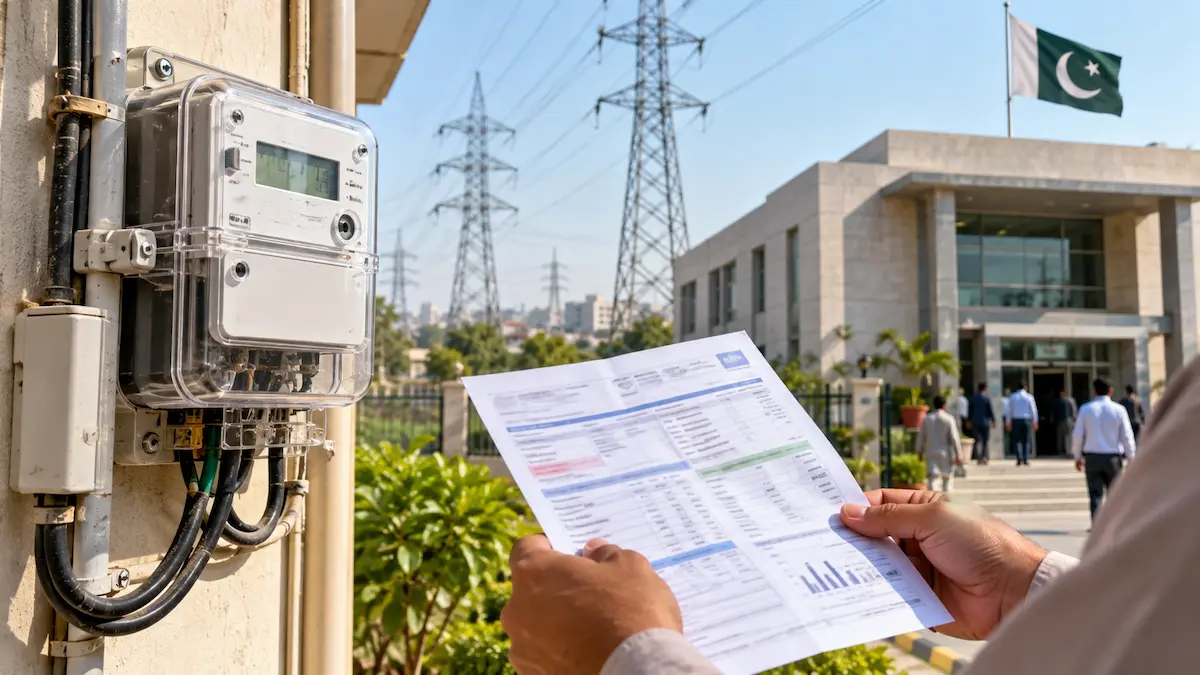
MEPCO Solar Net Billing 2026: New Buyback Rate
Net metering ended for new MEPCO applicants on 9 February 2026. Under NEPRA’s Prosumer Regulations 2026, exported solar units are no longer swapped one-for-one against imported units — they are bought at the national average energy purchase price, reported at roughly Rs10–11 per unit, while the units you draw from the grid are billed at your normal slab rate. Anyone holding a valid net-metering agreement dated before 9 February 2026 keeps the old terms until it expires.
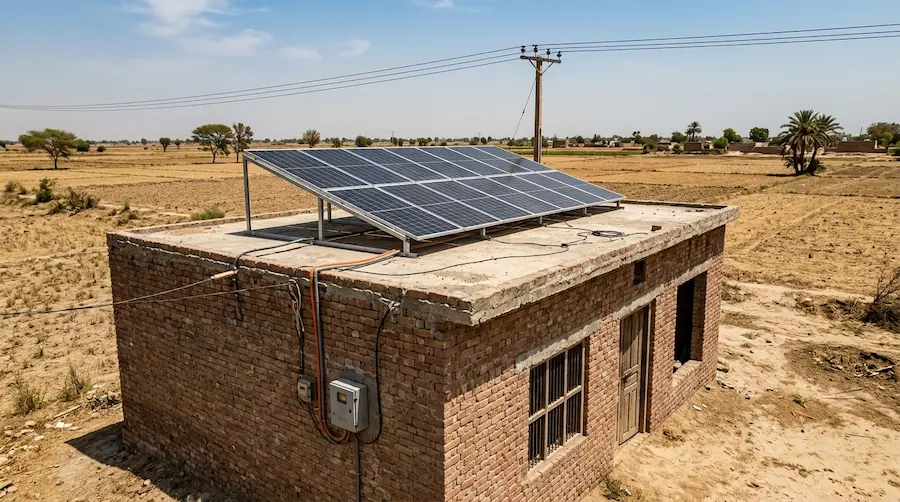
What actually changed
Old net metering ran on units. Export 300, import 300, and the energy charge cancelled out.
Net billing runs on money. Two separate transactions now appear: MEPCO buys your exported units at one rate, and sells you your imported units at another. You pay the difference.
If the export value exceeds the import value, the surplus is adjusted in your next bill or paid out quarterly.
Why Rs25.9 became roughly Rs11
This is where nearly every explanation online goes wrong.
The old buyback figure — around Rs25.9 per unit — was the power purchase price. It bundled two things: the energy component and the capacity component that the sector pays generators regardless of output.
The Prosumer Regulations pay only the energy component. That component alone sits near Rs10–11. Nothing was arbitrarily halved; the capacity portion was removed from what prosumers receive.
Two consequences follow. First, the rate is not a fixed number — it tracks a periodically notified average, so treat any single figure you read as a snapshot rather than a promise. Second, comparisons using the old Rs25 figure against the new Rs11 figure are comparing two different quantities.
Who is protected
Following intervention by the Prime Minister after the February backlash, NEPRA amended Regulation 21(2) through S.R.O. 547(I)/2026, with retrospective effect to 9 February 2026.
The position now:
- Agreement valid on or before 9 Feb 2026 — old terms, old rate, until your existing seven-year agreement expires.
- Application filed up to 8 Feb 2026 — processed under the previous regulations. The Power Minister confirmed 5,165 such applications, covering roughly 251 MW.
- Anything filed after — net billing, five-year agreement term.
Expiry is the cliff edge. When a legacy agreement runs out, renewal falls under the new framework.
The August 2026 change most people missed
NEPRA’s Prosumer Regulations had briefly centralised approval, requiring concurrence and a Rs1,000-per-kW fee for every system size. That drew heavy criticism.
The licence requirement for systems up to 25 kW was withdrawn in April. Then, through S.R.O. 1320(I)/2026 in early August 2026, NEPRA delegated approval for solar PV systems of 25 kW or below back to the distribution company itself.
For a MEPCO household or small shop, that means you apply to MEPCO, not to NEPRA, and there is no concurrence fee. Systems above 25 kW still pay Rs1,000 per kW.
Rules that decide whether you can connect at all
- Maximum facility size: 1 MW.
- System capacity cannot exceed your sanctioned load — the figure on your bill, not the size your installer wants to sell.
- No new connection is permitted where generation on your distribution transformer has reached 80% of its rated capacity. In dense solar clusters this rejects applications on technical grounds alone.
- Interconnection costs, including metering, are borne by you.
Check your sanctioned load before paying any deposit. A quotation sized above it will not clear.
Does rooftop solar still pay in South Punjab?
Yes for most consumers — but the arithmetic has inverted.
Under net metering, exporting was as valuable as consuming. Under net billing, a unit you consume yourself is worth your slab rate, while a unit you export is worth the energy-purchase rate. Self-consumption is now worth several times more than export.
That reshapes three decisions:
- Sizing. Oversizing to maximise export no longer earns its cost. Size close to daytime load.
- Timing. Shifting pumps, motors, washing and cooling into daylight hours converts export units into avoided imports.
- Storage. Batteries stopped being a luxury and became the mechanism that captures value the grid no longer pays for — though they carry their own cost and replacement cycle, so run the numbers rather than assuming.
South Punjab has an advantage here that Lahore does not: agricultural and small commercial loads are heavily daytime. Tubewells, ginning units and shops consume when panels produce, which is exactly the profile net billing rewards.
Before committing, work out what your remaining imported units will actually cost at your slab using the MEPCO bill calculator — that avoided cost, not the export rate, is where the return now comes from.
FAQs
Is my existing net metering cancelled?
No, if your agreement was valid on 9 February 2026. It runs to its original expiry.
Do I need NEPRA approval?
Not for 25 kW or below. MEPCO approves directly, with no concurrence fee.
Can I still get the old Rs25-plus rate?
No. That window closed on 8 February 2026.
Regulatory position current as of August 2026; NEPRA has reserved the right to revise purchase rates, so confirm the applicable figure with MEPCO before signing.