MEPCO Bill 2027: NEPRA Hears Rs27.31 Power Purchase Price
On 3 November 2026, NEPRA held a public hearing on what electricity will cost the distribution companies, MEPCO included, in 2027. The Central Power Purchasing Agency (CPPA-G), which buys power from plants on their behalf, has put next year’s average at Rs27.309 a unit. This year’s figure is Rs25.32.
This number is not your bill rate. It is the starting point for the base tariff that applies from January 2027, and the clearest early sign of where your MEPCO bill is heading.
Key figures at a glance
| Item | Figure |
|---|---|
| 2026 average power purchase price | Rs25.32 per unit |
| 2027 base case | Rs27.309 per unit |
| Range across six scenarios | Rs25.883 to Rs29.255 per unit |
| Increase over the current level | Re0.56 to Rs3.94 per unit |
| Total cost, base case | Rs3.55 trillion |
| Capacity charges, base case | Rs1.914 trillion (Rs14.717 per unit) |
| Units to be sold to DISCOs | 130,081 million |
| Hearing | 3 November 2026, NEPRA Tower, Islamabad |
What the power purchase price is
The power purchase price (PPP) is what a distribution company pays for electricity before its own costs are added. MEPCO’s network expenses, line losses, government subsidy and taxes all come after it.
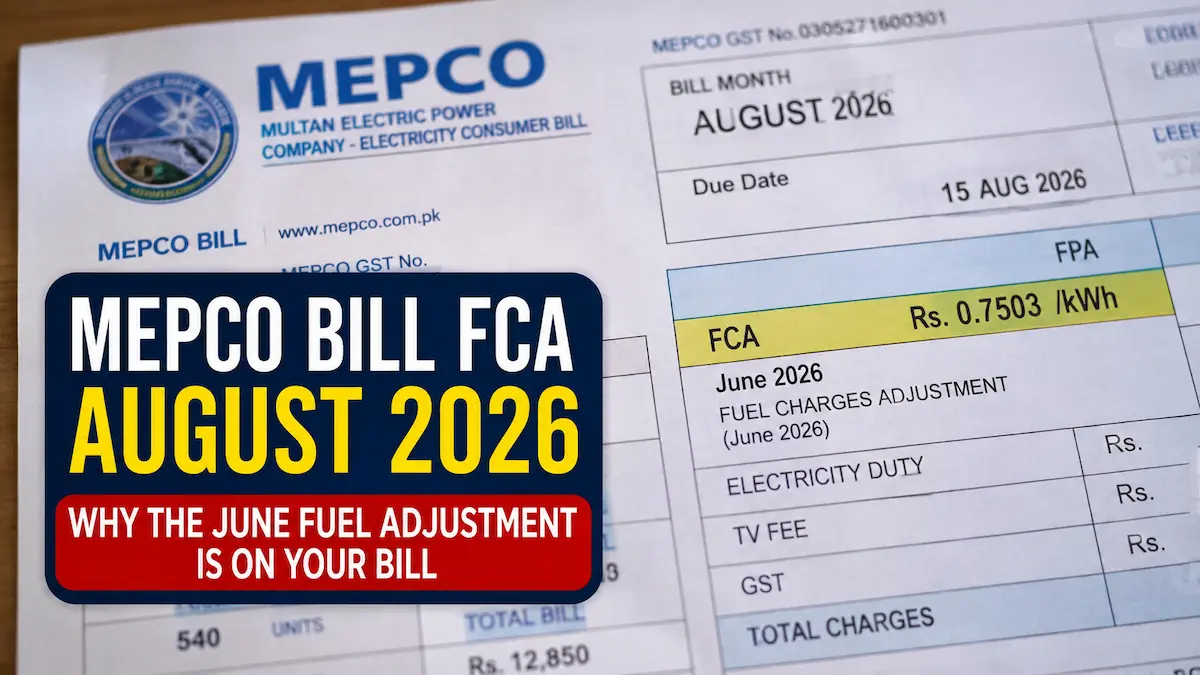
Each year NEPRA fixes a reference PPP, and the base tariff is built on it. When real costs move away from that reference during the year, the gap is charged or refunded through the monthly fuel charges adjustment and the quarterly adjustment. So this one figure shapes your bill twice: once in the base rate, and again as the yardstick for every adjustment in 2027.
Where the Rs27.31 comes from
| Component | Rs billion | Rs per unit | Share |
|---|---|---|---|
| Capacity charges | 1,914.4 | 14.717 | 53.9% |
| Fuel cost | 1,319.1 | 10.141 | 37.1% |
| Transmission and market charges | 248.3 | 1.909 | 7.0% |
| Variable operation and maintenance | 70.6 | 0.543 | 2.0% |
| Total | 3,552.4 | 27.309 | 100% |
More than half the price is capacity charges, the fixed amount paid to power plants for staying available whether or not their electricity is used. Fuel, which most people blame for high bills, is a little over a third.
The base case assumes 2.6% demand growth and an exchange rate of Rs279 to the dollar. CPPA-G’s forecast shows that a rupee at Rs290 alone would add about Rs47 billion to capacity costs.
Six scenarios, one decision
| Scenario | Rupee to dollar | Brent ($ a barrel) | Price per unit |
|---|---|---|---|
| Ideal case | 279 | 70 | Rs25.883 |
| RLNG and local gas mix | 279 | 92 | Rs26.441 |
| Base case | 279 | 92 | Rs27.309 |
| Low demand (0.7% growth) | 279 | 92 | Rs27.568 |
| Worst case I | 290 | 110 | Rs28.835 |
| Worst case II | 290 | 118 | Rs29.255 |
Even the best case sits above this year’s Rs25.32. The low-demand case is worth noting: if people use less grid power, the same fixed capacity cost is spread over fewer units, and the price goes up rather than down.
Why a winter unit costs more
The base case shows a large seasonal gap. In January 2027, the power purchase price works out to Rs36.471 a unit. In August it is Rs22.897.
The reason is simple arithmetic. Capacity payments stay roughly the same every month, but far fewer units are sold in winter: about 8,963 million in January against 14,860 million in July. In January, capacity charges alone come to Rs18.453 a unit.
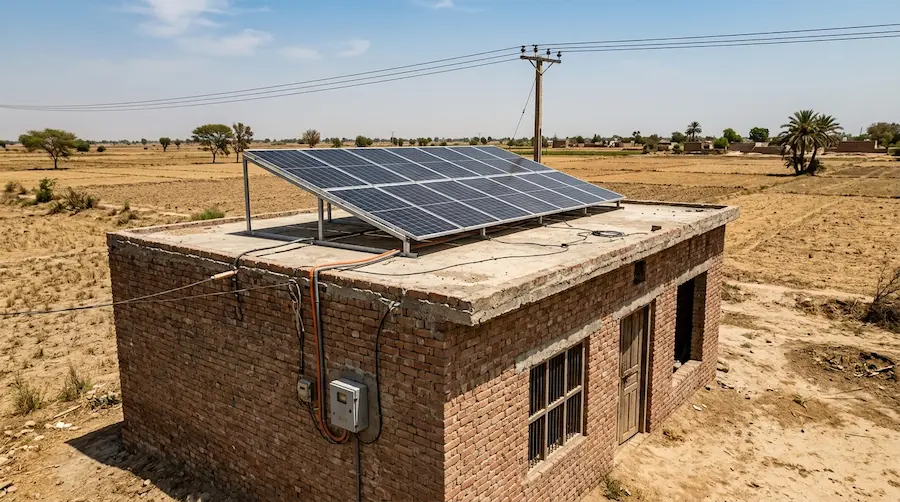
You will not see this monthly swing directly, because the base tariff is averaged over the year. It does show how hard falling grid sales hit the per-unit cost, which matters in South Punjab, where solar use keeps growing. CPPA-G also told NEPRA that data on net metering and captive power from the distribution companies is still awaited.
What was said at the hearing
- NEPRA Chairman Waseem Mukhtar said LNG availability would be a key factor in the final cost, and that supplies for next year were still unclear.
- CPPA-G officials warned that consumers could face a fuel price adjustment burden in December and January, citing low hydropower generation, less local gas for power plants and high fuel costs. CPPA-G’s managing director, Rehan Akhtar, said it was too early to put a figure on it.
- Tanveer Barry of the Karachi Chamber of Commerce and Industry questioned whether the promised cuts in capacity charges from talks with independent power producers had come through, saying they did not appear to be falling.
What it means for MEPCO consumers
Nothing changes on your bill yet. After the hearing, NEPRA will finalise the 2027 power purchase price and send the proposed base tariff to the federal government. The government then decides the uniform tariff and how much subsidy goes to each consumer group before it is notified.
Your January 2027 rate will also include MEPCO’s own distribution costs, which NEPRA is reviewing in a separate indexation case. Protected and lifeline consumers depend heavily on the subsidy decision, so their final rates may move differently from others.
For a sense of scale, take a home using 200 units a month. If a change at the low end of the range (Re0.56) reached the per-unit rate in full, it would add Rs112 before taxes. At the high end (Rs3.94), it would add Rs788. Neither is a forecast of your bill. Both are simply the size of the range being discussed.
Keep your latest bill handy so you can compare it with January’s. If you don’t have the paper copy, use our online mepco bill check with your 14-digit reference number.
Frequently asked questions
- Will my MEPCO bill go up from January 2027? Not decided yet. NEPRA has heard the forecast, but the final base tariff depends on its decision and on the federal government’s subsidy choices.
- Is Rs27.31 the rate I will pay per unit? No. It is the cost of buying power for the distribution companies. Your rate depends on your slab and category, plus MEPCO’s costs, adjustments and taxes.
- Why could more solar raise grid prices? Capacity charges are fixed. When fewer units are sold from the grid, each remaining unit carries a bigger share of that fixed cost.
- How can I estimate the effect on my bill? Once NEPRA and the government notify the 2027 rates, enter your monthly units in the mepco bill calculator to see the new total.